
Who Am I, Really?
What Meditation Taught Me About Thoughts and Identity
What Defines Us?
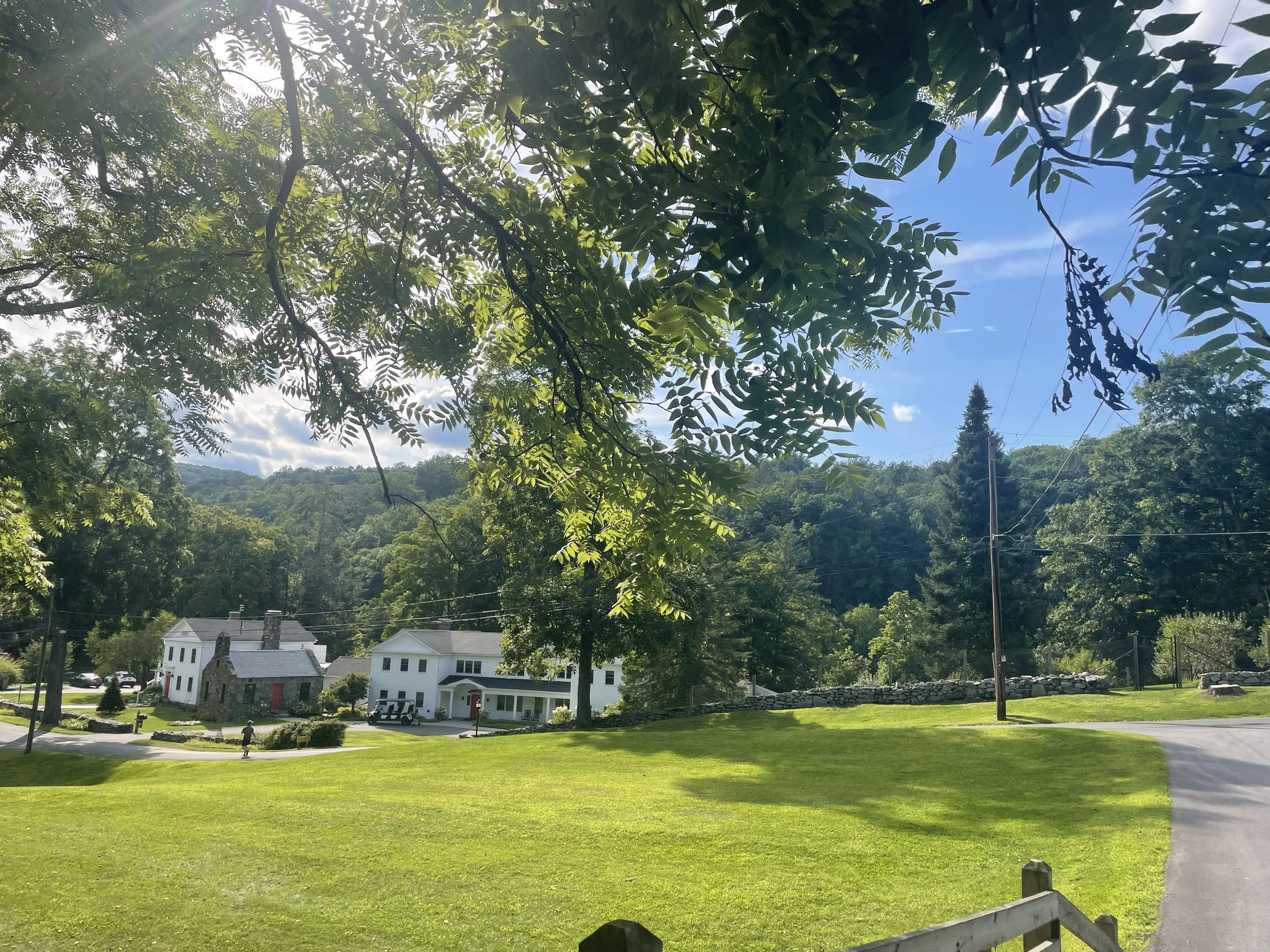
As I sat cross-legged in a silent hall full of 40 other meditating people, I found myself asking the question “who am I, really?” It was in the misty hills of Connecticut on a Jewish silent meditation retreat that I started to clear the cobwebs of my mind and made space for answers to come in.
This question of “who am I” is really quite odd. It has so many possible answers to ponder. Are we a compilation of our character traits and our personality? Are we defined by our families, our culture, our friends, or our jobs? Do our astrological star signs or our Myers-Briggs letters form our identity?
It brings to mind a poem I wrote when I was in grade school entitled “I am,” which listed out line by line things that I felt made me who I was at the time.
“I am my grandmas matzah ball soup and family Friday night dinners”
“I am the stuffed bears and baby blanket surrounding my pillow at night”
“I am from riding my bike after school with my neighbors and eating milk and cookies with my dad”
Reading it back after all these years, I find it quite beautiful and still resonate with every line. These were things that wove the fabric of my life, but did they define me? I think our experiences certainly shape us, but I’m not sure they define us.
I learned something new about this idea on my retreat. I was previously under the impression that meditation is about finding rest and respite from the often intense, stressful, and crazy outside world. Yes, this is part of it.
But what I really learned is that meditation isn’t just about finding stillness of the mind, it’s actually about finding yourself again and again and again through all of the noise. The noise of the outside world, of the news, of the influencers on social media, of even your own thoughts and feelings.
Meditation strips away the transient things and brings you into touch with your core – the parts that are purely you and always there. It’s more of a feeling than something you can define. And only you have the capacity to feel it for yourself.
That’s why quieting the noise is so important. Otherwise, we get lost in believing that we are all these other things. We begin not only to believe what others have told us, but we also start to believe all the thoughts our brains conjure up.
The Stories We Tell Ourselves
Our minds seem to have an endless job of creating thoughts. I believe thoughts are our mind's way of keeping a sense of consistency and safety. Our minds love to fill spaces of uncertainty with stories that try to make sense of our inner world and the world around us.
How often do we experience a sensation in our body and immediately attach a story to it? A racing heart becomes “something is wrong.” Fatigue becomes “I’ll never feel like myself again.” Anxiety becomes “I am an anxious person.” Stomach pain becomes “my body can’t ever tolerate anything.” We don't just experience the sensation, we experience the story we've built around the sensation.
This is where a meditation practice becomes especially powerful. The sensations are real. The stories are optional.
I have learned to simultaneously thank my mind for doing its job beautifully, while also questioning its validity. Just because I thought it doesn’t make it true. If we can release the story behind the sensation or release our grip on the thought itself, then we can simply be with the present moment.
What is really true is this one moment. This new moment where the thought from the previous moment is already gone forever and the next thought has yet to come. This one moment of stillness and presence. This new moment is another opportunity to return to yourself.
And so is this one, and this one, and this one. Every moment anew. Each quiet space a return to Self, to core, to soul.
Return to Self
This practice of returning has taken on new meaning for me through the Jewish month of Elul.
In this month, we reflect on the past year and all the years of our lives to admit to what we’ve done wrong and pledge to be better in the year ahead. We speak of the word “teshuva” during this time, which is commonly translated as "repentance."
I didn’t know until recently, though, that it also means “return.” We are accounting for where we have fallen short, but really, it is a pledge to return – to who we really are, to our essence that is already pure and whole.
While it is easy to deviate from our true selves, this month is a reminder of what is always there. When we are called back, meditation is one way we can access it.
I challenge you to find some space between your Self and your thoughts this week. What would it be like to separate the two? What would it be like to unblend a thought – to notice that you are having the thought without becoming it? What would it be like to sit with the space that arises? A new window into you.
Try this the next time you catch yourself ruminating:
1. Notice it.
“I’m having the thought that…”
2. Feel what is actually happening in your body.
If there is an emotion or sensation, try to locate it. Where is it? What does it physically feel like?
3. Separate yourself from the story.
What do I actually know is happening right now? What story am I adding to it?
4. Return to this moment.
Feel your feet on the ground. It can be helpful to repeat an anchoring phrase like “return” or “I am here.”
This is not an easy task, so give yourself permission to struggle. Find grace and gratitude for everything that is already there, everything that comes up, and even the parts of you that criticize how “bad” you are at it.
It is all important.
It is all divine.
So, my friends – hear the call, turn inwards and find yourself again, and pledge to keep returning over and over and over again even when you forget.
In light,
Dr. K
I want to thank the Institute for Jewish Spirituality, the incredible teachers on the retreat, and the Trinity Retreat Center for creating a space of such openness, gratitude, and compassion, and for sharing your wisdom about some of the most fundamental questions of being human.
